It isn’t that eco-friendly living is too expensive. It’s just that we’ve filed it under “work” instead of “joy.”
I was chatting with a woman after a recent presentation on individual carbon footprints. Those post-talk moments, the conversations that happen after the formal Q&A ends, are usually consistent with what I hear everywhere I go, from community workshops to craft fairs. And they are a fascinating anthropological study in how we justify our own inertia.
During our chat, she laid out all the reasons why living sustainably felt out of reach – local farm stores are too far, refilleries are inconvenient, and eco-friendly swaps are just too expensive – never mind her statements about how inadequate all the solutions are. By the time we wrapped up, I found myself landing on a discouraging thought.
“Maybe we have to be altruistic to be sustainable.”
But the more I thought about it, the more it just didn’t sit right. I started thinking about all the things people spend their money on every single week without ever labeling them as “too expensive” or “too inconvenient.”
So, I don’t think we need a wave of saintly altruism to lower our carbon footprints. We just have to change our framing.
The trap of waiting for “perfect” sustainability
Before we even get to the discussion regarding our time, effort, and wallets, we have to address the first (and maybe the most common) excuse we use to opt out – the imperfection of the solutions themselves.
In almost every conversation about individual climate action, we end up falling down the plastic recycling rabbit hole – or pointing to some other broken infrastructure that doesn’t live up to its potential. It can be wildly depressing and absolutely disappointing, discouraging – you name it…
Look, I know that plastic recycling is deeply flawed – at best, it turns polymers into synthetic clothing like polyester and spandex, keeping plastic in perpetual motion until we have enough micro-particles in our bodies to build a spoon. Argh! But I would never agree to nonparticipation in a solution because it hasn’t quite peaked yet.
And let’s not even go down the available plastic straw substitutions. Does anyone actually like a paper straw? Is it just me, or do they seem to disintegrate if you even look at them too aggressively?
This imperfection of solutions shows up everywhere – at the grocery store, in our holiday shopping, in transportation, and in the products we try. (Case in point: I recently bought a concentrated dish soap that required mixing 10 parts water to 1 part soap. The resulting texture was an absolute disaster, and I felt like I was squeezing half the bottle down the drain just to get a decent lather. Was it a good buy? Definitely not.)
When we look at clunky, imperfect systems, our knee-jerk reflex is to say, “No, but…”
The world may lack ready-made, turnkey solutions that make climate action effortless. But just because a perfect solution isn’t being handed to us on a silver platter doesn’t mean we can’t pull up a chair. Is recycling perfect? No. Do we still need to do it? Yes. Because the alternative to embracing an imperfect solution is simply circling the problem while doing nothing at all. And essentially making our biggest problem even bigger!
“Fun Money” vs. “Chore Money”
Once we accept that the mainstream options that exist are imperfect but still come under the categories of “necessary” and “progress,” we run into the aforementioned obstacles of cost and convenience.
To be clear, I’m not talking about major capital investments like solar panels, heat pumps, or electric vehicles. Those require budgeting, lifespan calculations, and return-on-investment math. Nor am I ignoring the very real systemic barriers of access and affordability that prevent some from participating.
I am talking about those of us who do have the means. And how sustainability stacks up to our normal daily habits. I have seen some very talented financial acrobats when it comes to the things we actually want – myself included.
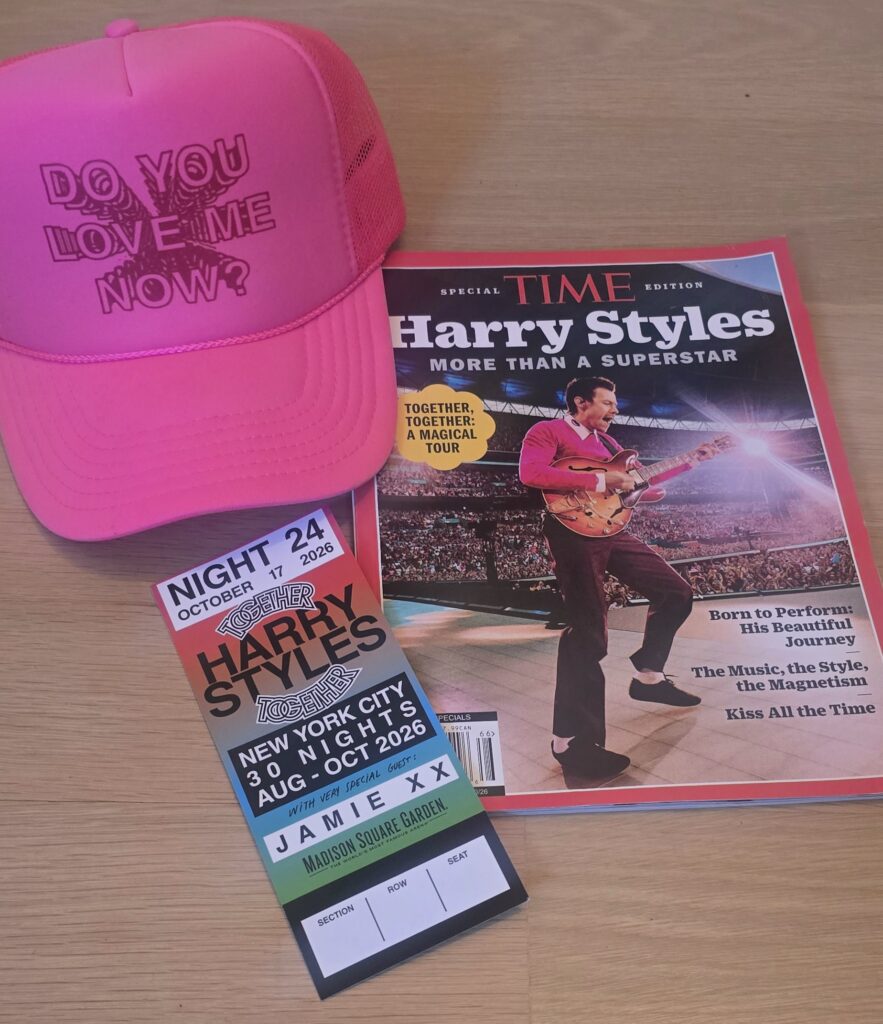
We will happily map out a logistics plan worthy of a military general to get ourselves to a crowded restaurant across town, drop money on parking and overpriced small plates, buy concert tickets that require a second mortgage (can you say, Harry Styles – oh yeah!), and maintain manicures that defy the laws of structural engineering.
Yet, tell someone that a refillery or a Community Supported Agriculture (CSA) pickup is fifteen miles away, and suddenly we turn into strict fiscal conservatives gasping at the price of gas, organically grown food, or a bar of shampoo.
Let me accentuate with an example that might hit close to home, even closer than those Harry Styles concert tickets. According to industry tracking, Starbucks pulls in over $21 billion (Yep, that’s a B for Billion!) a year in coffee sales, with Dunkin’ at over $9 billion. We have successfully normalized paying seven dollars for a sugar-filled, burnt bean beverage delivered in a single-use, plastic cup (don’t even get me started on that damn plastic cup!) because we’ve categorized it under “things that make me happy.”
So perhaps it isn’t that sustainable living is inherently more expensive. It’s that we have filed sustainable living under work – right next to filing taxes and flossing – while our daily splurges live comfortably under things that bring me joy.
We have somehow taken our wants (going to the theater, seeing Harry Styles in concert (last reference, I promise!), getting our nails done, grabbing a daily Frappuccino) and elevated them into emotional needs, thereby justifying their cost. Meanwhile, we treat planet-saving habits like obligatory chores, refusing to spend an extra dime or drive an extra few miles for them.
What we’re already wasting
When we complain about the occasional eco-swap that misses the mark – like my watery dish soap experiment – we conveniently forget how much money we waste in the conventional system.
We can’t pretend that every mass-market purchase we’ve made at a big-box store is a home run. Hardly. According to Food Rescue US, Americans throw away roughly 40% of our food supply – about 550 pounds of wasted groceries per person every single year – without batting an eye at the financial hemorrhage.
The barrier isn’t the price tag on a bamboo toothbrush or a bulk bin of lentils. The barrier is what we choose to prioritize.
Shifting the lens
I’m not here to poo-poo a good time. Get the manicure, see the show, enjoy the coffee (can you at least bring your own refillable cup?)!
I’m simply suggesting that we apply that exact same generous, joy-seeking mindset when we consider sustainable options over single-use, waste-producing ones. What if we stopped viewing the planet’s survival as a chore we’re trying to dodge, and started embracing sustainable living as a treat?
Imagine if the next great weekend itinerary wasn’t blowing paychecks on neon cocktails, but a coordinated road trip with friends to a local refillery, followed by a farmers’ market visit, vintage clothes shopping, and lunch at a farm-to-table spot.
Sustainable living isn’t more expensive than your lifestyle habits. We just need to stop pretending that buying a daily latte is a human right, while buying a locally grown carrot is an act of charity.
Feels like a mic drop, let me know in the comments!