
My everyday struggle – the thing bopping around my head daily – is how to help save the planet by reducing our reliance on fossil fuels, exposing the structural corruption within the US economy, helping people adopt a simpler, lower-carbon lifestyle, and convincing everyone to just be a little more neighborly.
That’s all! What’s on your mind today, lol?
Normally, as I read, write, and chat with people out in the world, I am internally processing how to motivate people to get involved. For the most part, I would just love it if people thought about their own household carbon footprint. My theory is that it is a gateway action. Once people start adopting sustainable habits, one at a time, those actions compound. The person who starts buying bar soap and solid shampoo instead of plastic bottles tends to like how it feels. Soon, those habits expand to refillery shopping, returning film plastic to the grocery store, and supporting their local CSA.
But my thoughts on this have drifted over the past couple of weeks. While I have spent the last year talking to people one-on-one trying to inspire them to fight for the planet, I’ve realized there is apparently a way to engage their fight reflex immediately.
Right now, my town is engaged pretty heartily in a fight against an energy company trying to build a massive warehouse and truck stop right near a local wetland. I’ve been following the paper trail and zooming into the meetings, and what I found was a packed room at the Wetlands Commission. The community has been out in full force. The meetings have dragged on for hours because the sheer number of people showing up to speak is overwhelming. There are over fifty letters in the file from local residents fiercely voicing their opposition.
If you look at the crowd, they aren’t environmental lawyers, biologists, or career scientists. They’re moms, dads, homeowners, and local business owners. They are tapping into raw courage, standing up, and fiercely defending a piece of land they love. And honestly, they might not specifically love that exact piece of land, but what they absolutely do not want is a truck stop in their backyard.
It is classic, textbook NIMBYism: Not In My Back Yard.
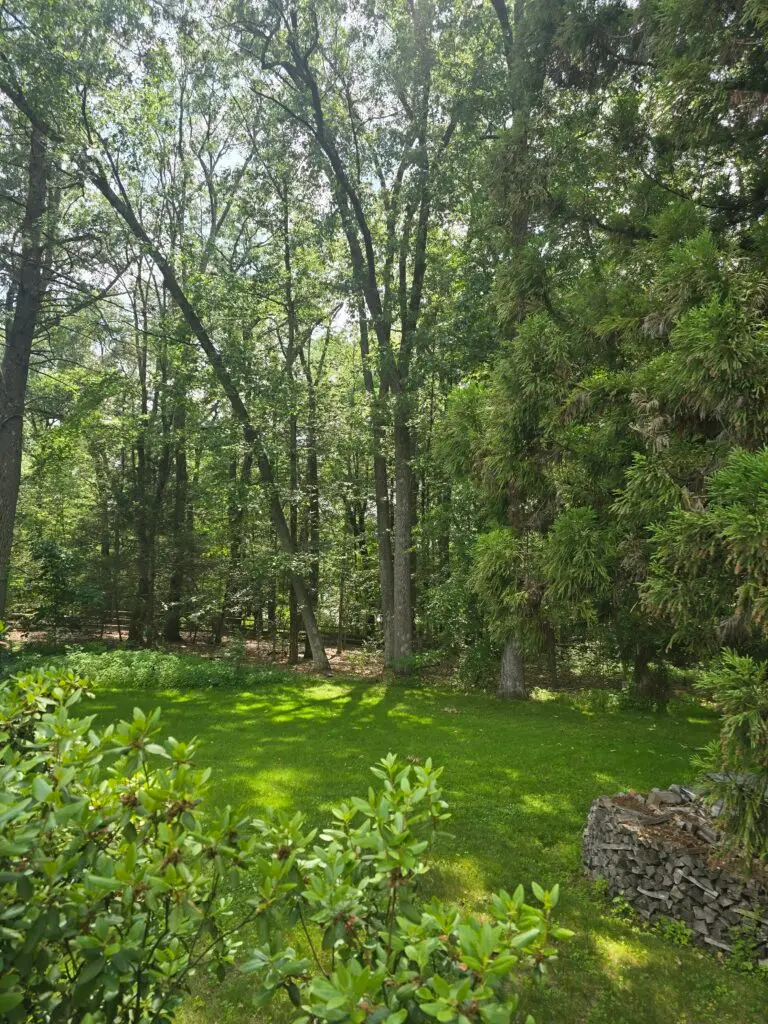
Don’t get me wrong, I am right there with them. I don’t want an unnecessary truck stop in my town, and I definitely don’t want any more natural land developed. I feel like we are going entirely the wrong way on that. My heart breaks a bit every time I see another patch of woods turned into a housing development. We are constantly displacing animals, and we desperately need natural habitats and open space.
So, while I absolutely hope we save our wetlands and block this expansion, the whole experience left me contemplating a bigger question – Why isn’t there this same vigor when it comes to protecting the global planet? If that energy exists out there in the mainstream, I’m just not seeing it.
I want to shout from the rooftops – Where is this energy the rest of the time?! Why does our passion for activism only activate when we can literally see it, smell it, or drive past it on our morning commute?
The Toxic Underbelly of NIMBY
Let’s be honest about NIMBYism. Historically, it has a dark side. Its rise is defined by the protection of property values, the preservation of an aesthetic view, or the avoidance of traffic congestion. But while one neighborhood successfully protects itself, it often creates a massive inequity in another.
If I successfully block a pipeline, a landfill, a power plant, or a chemical manufacturing facility in my neighborhood, the project doesn’t tend to magically vanish. It just gets moved. And where does it go? It gets pushed down the line to a community that doesn’t have the same resources, the same political clout, or the same luxury of time to sit in town halls for months.
That’s how we end up with tragedies like “Cancer Alley,” the infamous 85-mile stretch along the Mississippi River lined with over 150 petrochemical plants and refineries, where residents suffer from cancer rates up to 700 times higher than the national average. Traditional NIMBYism protects the wealthy and the organized, while driving toxic waste and pollution straight toward minority and low-income neighborhoods.
So yes, traditional NIMBYism can be incredibly selfish. It says, “As long as it isn’t affecting my child’s health, you can go ahead and build that monstrosity somewhere else.”
But that’s not what I want to focus on today. I don’t want to talk about the self-centeredness. I want to talk about the vigor!
The Unbelievable Power of the Local Fight
The energy I witnessed at my town hall was beautiful. The enthusiasm, the letter-writing, the protesting, the collective action – that mainstream passion is exactly what is missing from the global climate fight.
Right now, there are brilliant global organizations like the Sierra Club, 350.org, and The Climate Reality Project (and so many more!) doing incredible work every single day to save our environment. But unless you are actively looking for them, you can live your entire life in a comfortable little pod, totally unaware of their existence. You can actually live completely unsustainably, even within the “green” community. I constantly see people who claim to fight fossil fuels chugging from single-use plastic water bottles, using plastic straws, and grabbing disposable cups, creating endless waste. (But navigating that weird contradiction between convenience and our values is definitely a conversation for another day!)
If the devastation isn’t happening in our literal, physical backyards, do we just choose not to engage? The planet’s future is currently left in the hands of a niche group of activists who are doing way too much heavy lifting. It’s why the most common phrase they use to describe their own life’s work is just “moving the needle.”
I am sorry, but I have to ask – why do we live in such collective denial? Are we so short-sighted that we can’t see the lines connecting our backyards and our neighborhoods to the rest of the world? We are systematically choking out the ecosystems that give us our own oxygen and water, literally pulling the rug out from under our own feet, simply because the damage is happening a few (or several) zip codes away.
It is totally rational, and dare I say, obvious, that the world is entirely interconnected. The oceans, the air currents, the food supply… it all travels. The toxic air over Cancer Alley doesn’t check your zip code before it hits the atmosphere. The microplastics in the Pacific Ocean end up on our dinner plates. I could go on, but I won’t!
Logically, we know this. So why don’t we act like it? No, really, does anyone out there actually know?
Time for a New Acronym: Welcome to NOMP
We need to take that fierce, protective, “not in my backyard” local town hall energy and scale it up. (Oh, the absolute glory of this thought!) We need to stop acting like our neighborhood ends where our property line does.
Our neighborhood is the Earth. The world is our backyard.
It’s time to retire NIMBY and start a new movement – NOMP, “not on my planet!” Is there any way we can get this idea to catch on in every town hall, every school, and every neighborhood group?
NOMP. Not On My Planet.
Imagine if we brought the same intense rage we feel about a local truck stop, to the destruction of global biodiversity. Imagine if we wrote those fifty letters to corporate polluters or signed federal petitions with the exact same urgency we use to protect our local sightlines.
The people at my town meeting proved that you don’t need a PhD to be a powerful advocate. You don’t need to be a scientist. You just need to care about what happens to your home. Well, this planet is our only home.
Let’s stop protecting just our little pods. Can we rise up, tap into our NIMBY energy, expand our perspective, and join the wider fight? Let’s NOMP it! We need mainstream, not niche! We need everyone, not just full-time activists! We need global, like Earth, not just our literal backyards.
We need NOMP! Not On My Planet. Let’s make it catch on.





2 Responses
Thank you, Kim. It’s a great train of thought. I personally feel like the feedback people get time and time again, is that all this time, effort, emotion yields very little. The folks with power to make the really substantial changes needed often side not with the big populations who speak out but rather with their own agendas. It’s disheartening. I do try to work on small things, hoping they lead to cumulative positive changes though…
I totally hear you! It has certainly felt like a bit of a rollercoaster ride. But if this little fight in my town has shown me anything, it’s that people do have the desire and willingness to show up and fight – and can do so successfully – organized people can make an impact.
If you ever want to channel your efforts into something a bit bigger, I’d love to chat. I’m currently working with the Climate Reality Project (the org initially started by former Vice President Al Gore), and we are expanding the Southern CT chapter into the Hartford area. It has been so refreshing to be part of a group that actually has the tools, resources, and encouraging support to make a dent. Let me know if you’d ever want to loop in!