There is so much for us to disagree about in the world today. Sometimes it feels like our differences are constantly on display. Maybe that’s just me, but I suspect it isn’t.
After all, there are endless things people simply won’t agree on. I will never like any flavor of ice cream more than chocolate. Boxer is the only dog for me. I only have eyes for my very adorable and left-leaning Danish husband. I hate loud music and love rom-coms.
Those are small examples, but the point stands. Our preferences and perspectives are shaped by our upbringing, our experiences, and the lives we’ve lived. We all see the world differently, and there is a wonderful clarifying analogy for this – the beach ball perspective.
Imagine you and I standing on opposite sides of a gigantic striped beach ball that we hold right in front of our faces. The color of the stripe in front of you is red. You see red. The color of the stripe in front of me is blue. I see blue. We can argue and disagree about which color the ball is, when in reality we’re both right. Perspective can make things complicated, but there is one thing that I am certain we can all agree on.
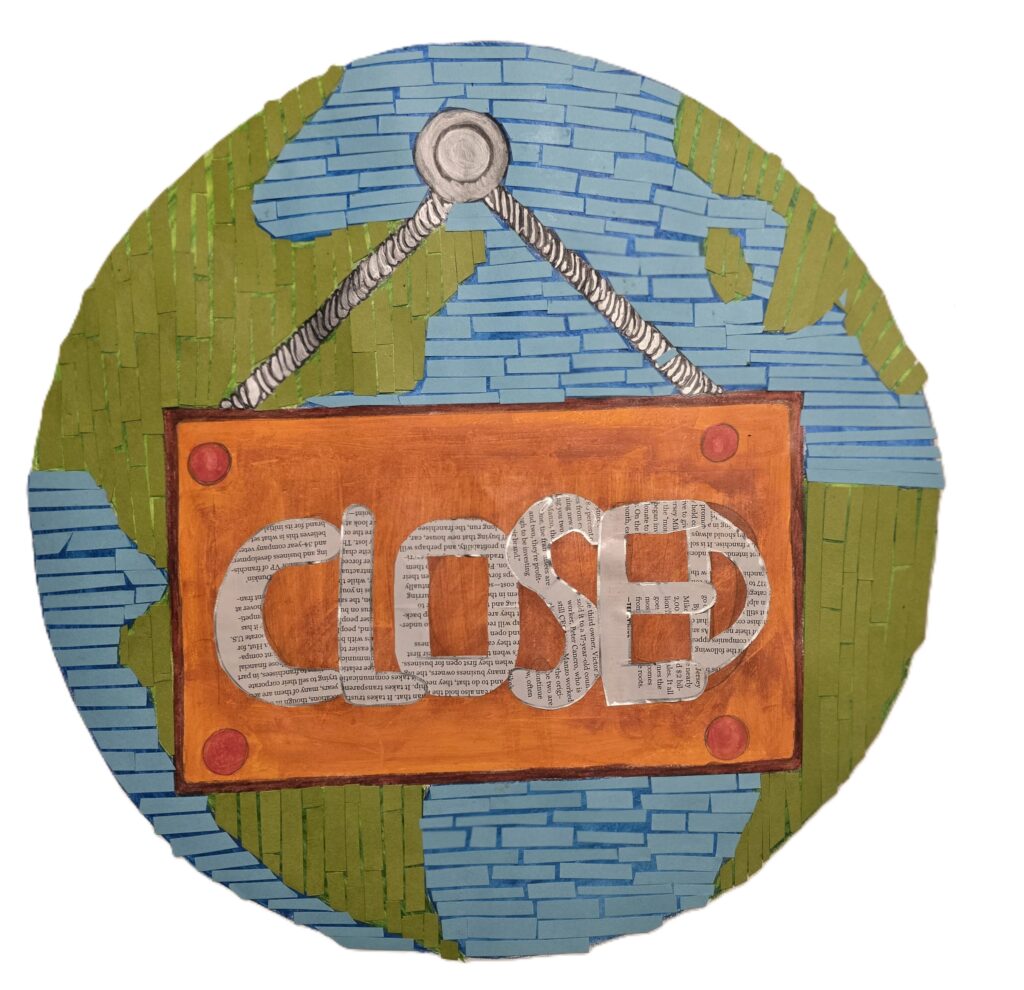
Our planet is a finite size.
Pause for a moment and really think about that. You don’t have to obsess about it the way I sometimes do, just let the thought settle in for a minute. Earth is finite. And yet, the number of people living on our little finite planet continues to grow. And on top of more people, countries measure success by growing their economies. The ever-increasing GDP means producing and selling more things every year than the year before. More goods. More packaging. More consumption. More of everything. And as we produce and consume more, we also create more waste. Because almost everything we own eventually becomes waste.
Look around your house for a moment. Nearly everything you see, from furniture and electronics to clothes and packaging tucked in drawers and cabinets, will someday become trash. It doesn’t require an advanced degree in economics or environmental science to understand. It’s closer to kindergarten math. A system with a finite size cannot hold an infinite amount of stuff. That’s really the point.
We don’t have to share the same politics. We don’t have to share the same religion, culture, or hometown. But we do share this, a planet with physical limits, and a system that currently behaves as though those limits don’t exist. If that thought sparks even a small moment of curiosity, stay with me. Because the good news is that many of the solutions are surprisingly simple.
Think about your own home. If you live in a house with three rooms, you’re naturally thoughtful about what you bring into it. You make choices because space is limited. The planet works the same way.
What if we started thinking about our consumer habits through that lens, treating the Earth the way we treat a small home with limited storage? And what if we also recognized something else, many of the things we need already exist. They’re just sitting in someone else’s house. That’s where the solutions start to take shape.
They begin with neighborhoods sharing tools, toys, and bikes. They begin with swaps at schools for books, clothes, and household items. They begin with fix-it shops, mending circles, and the growing popularity of secondhand and vintage stores. In other words, they begin with remembering that on a finite planet, sharing, repairing, and reusing aren’t quaint ideas, they’re necessary ones.
But those same ideas don’t stop with the things we already own. They also show up in the choices we make when we buy something new. They also show up in our purchasing decisions, especially when we consider packaging. Packaging exists for one simple reason, to carry an item from one place to another. But somewhere along the way, packaging stopped being a simple tool for transporting goods and became a built-in part of nearly every product we purchase. And because it’s treated as normal, we rarely stop to question how much of it we actually need. Many of us don’t even notice it anymore.
I still get funny looks when I insist on putting my “naked” groceries like fruits, vegetables, and other unpackaged items straight from my cart into my car. No extra bags. No unnecessary wrapping. Of course, there are limits. I can’t pour hot coffee into my hands. So, I’ve made a simple rule for myself. If I don’t have a refillable container with me, I skip the drink. It is a tiny decision, but those small decisions add up.
The same goes for shopping. More and more stores now offer bulk bins or refill stations where you can bring your own containers and avoid packaging altogether. It’s a simple habit change, but one that dramatically reduces the amount of waste we create.
At first, these changes will feel unfamiliar, a bit annoying, and certainly inconvenient. But when you go back to the realization that our planet is finite, the logic becomes clear.
More people. + More production. + More consumption. + More waste.
That equation simply will not work forever. Which means the real question becomes this – Do we want to be part of increasing the problem, or part of building the solution? The good news is that being part of the solution just requires small shifts in how we think about the things we buy, use, and throw away. Here are a few simple places to start.
1. Borrow before you buy.
The next time you need a new tool, send a quick email or message to your neighbors. There’s a good chance someone nearby already owns exactly what you need.
2. Share what you no longer use.
When you clean out your garage or basement, post those children’s bikes, outdoor toys, planters, or garden equipment in a neighborhood group like “Buy Nothing.” What’s clutter to you might be exactly what someone else needs.
3. Repair before replacing.
When your blender stops blending or your mixer stops mixing, see if a local repair shop can fix it. Repairing an item keeps it out of the landfill and often costs less than buying something new.
4. Rethink clothing waste.
When cleaning out your closet, remember that donation isn’t always the best option for worn-out clothing. Torn or stained items can become fabric for other uses, and many communities now offer textile recycling or mending groups.
5. Reduce packaging when you shop.
Try finding a store that offers bulk bins or refill options for pantry staples and household products. Websites like https://refill.directory/ and https://www.nationalco-opdirectory.com/ can help locate options near you. Even if the nearest store isn’t in your town, a monthly refill trip can significantly reduce the amount of packaging you bring home.
These ideas aren’t just tips; they’re ways to live thoughtfully on a planet that doesn’t have unlimited room for everything we produce and consume. When you really think about it, the idea of a finite planet isn’t complicated. It’s simply a reminder that the space we share has limits. Our choices have impact. We can choose to buy less and share more. We can repair instead of replace. We can refill instead of throwing away. None of these actions are radical. In many ways, they’re simply a return to the common-sense habits that previous generations practiced every day. And when enough of us begin making those choices together, our sweet little finite planet gets a little less cluttered, a little less polluted and a lot healthier.