This blog post has a fun origin story. My daughter Luna just finished a two-week basic water rescue course, and as part of the training, she learned about something called the Bystander Effect – the psychological idea that people are less likely to help when others are around. Everyone assumes that someone else will step in. Luna immediately thought it would be a great topic for a blog, and I could not agree more.
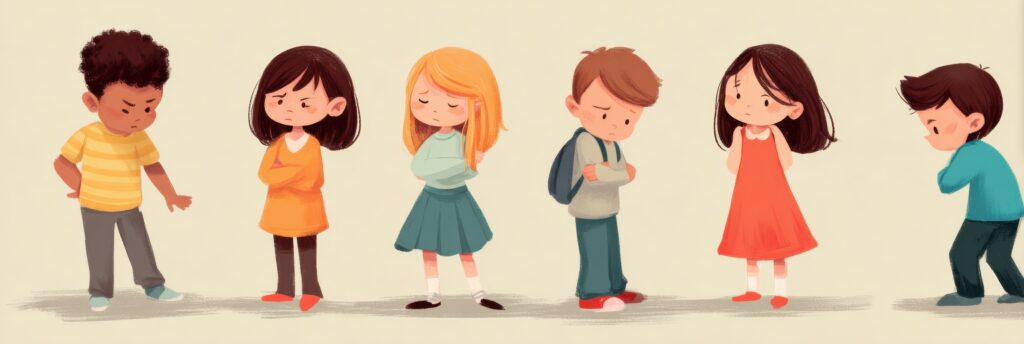
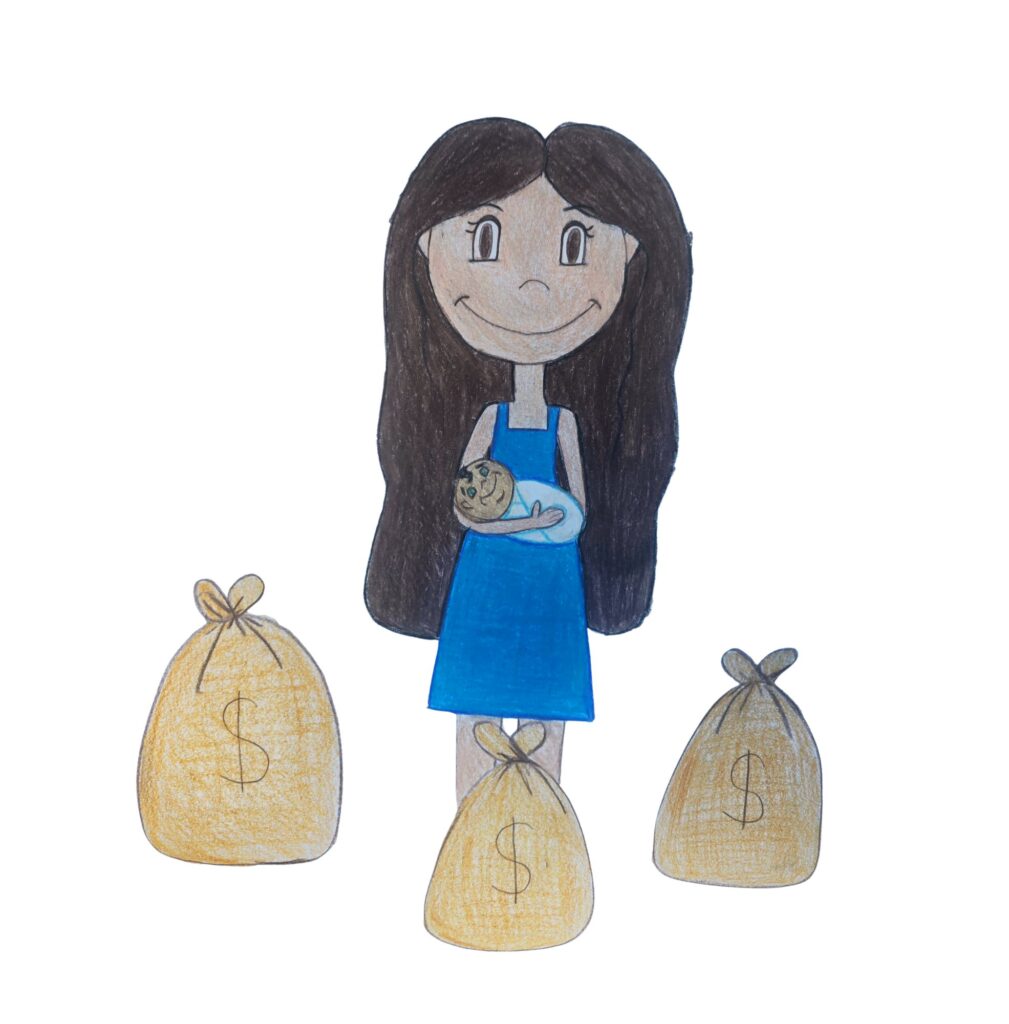
Honestly, it would be even better if she were the one writing it, but she is a bit busy at the moment “summering” and creating artwork for our second book, A Kid’s Guide to Economic Activism for the Climate, coming out later this year. I have included a few of the art pieces that she is working on for the book below. These are in their initial stages. You will have to get the book to see the final images – collaged and all. But we both hope you enjoy the little preview!
We are excited about the book because we both really want to amplify the topic of climate action. We have prioritized the conversation with middle-grade readers, but it is just as important to keep sharing ideas with all of you here. This blog is for anyone curious about how we can turn small insights, like the Bystander Effect, into big shifts toward collective climate action.
The Bystander Effect is one of those wild psychological concepts that is totally recognizable once you know about it. In short, the more people who witness an emergency, the less likely any one person is to step up and do something about it.
Sound familiar?
I’m opening with a bit of sarcasm here because, honestly, it feels like the perfect metaphor for the climate crisis. The more people who know about it, the easier it becomes to assume someone else will take care of it. The bigger the crowd of bystanders, the smaller our personal sense of responsibility tends to feel.
Now, when I dig into ideas like this, I always aim to stay hopeful. I believe in inspiring action, not feeding despair. There is more than enough doom and gloom out there already! My goal is to make sure this space stays grounded in possibility, not paralysis. So, hang in with me while we flip this concept around and find a way to use it for good. Because here’s the thing, if our instincts are telling us to wait for someone else to act, then we’ve got to push back on that just a little, or maybe a whole lot!
What if you were the one who stepped up?
Would it be so bad to be the first in your friend group, neighborhood, school, or workplace to lead the way on climate action? Someone has to go first, and it might just have to be you.
I’m wondering why that hasn’t happened globally yet??? And I question if it doesn’t come from one of the key psychological forces behind the Bystander Effect called pluralistic ignorance. Pluralistic ignorance is the idea that if no one else seems concerned or is taking action, maybe there is not really an emergency.
Sound familiar again?
If this is one of the reasons we stay on the sidelines, then part of our work is helping each other see the emergency for what it truly is, and to stop looking around for permission before we act.
So, let’s be clear, climate change is an emergency. It’s not just about polar bears or future generations – although as a mom, for me, it is very much about future generations. But it is happening now, affecting people now! We’ve seen record-breaking heat waves across the globe, wildfires in places that never used to burn, and devastating floods from storms supercharged by a warmer atmosphere. And unfortunately, the list of impacts goes on and on. Every year we delay action, the window to avoid the most dangerous outcomes gets smaller.
But because I have promised myself to always be positive, here’s where the hope comes in – we are not powerless. The moment we stop using other people’s inaction as our cue, we begin to shift the direction of Earth’s future story. We get to decide what is right, not just for ourselves, but for our kids and every generation of kids to follow. As the author Rex Weyler puts it, we must “form an alliance with the biophysical ecosystem” that gives us life. Earth is a self-regulating, complex system, but if we keep pushing it too far, it will recalibrate in ways that may no longer support us. A quick look at Earth’s history will show us that it has done it before. Not sure, think dinosaurs!
So, what is the answer?
Define yourself as an “Upstander.” Being an Upstander means choosing action over apathy. Upstanders believe their voice matters, their choices count, and that change begins with them. They stay focused on the impact they can make, rather than being held back by what others might think or whether anyone else is stepping up. What sets an Upstander apart is confidence, courage, and a deep sense of connection to the world around them. They don’t wait for permission to care. They lead by example. That is what I want to do, what about you?
Being an Upstander may be easier than you think. In fact, studies show that when people know they are being observed, they are more likely to take positive action. That means every climate-friendly thing you do, big or small, has the power to influence others. It creates a ripple effect. And believe me, the next generation IS watching, so let’s all get Upstanding! They are learning from what we do, not just what we say.
Now what?!
If you are ready to step up, lead by example, and become an Upstander for the planet, here are some simple but powerful ways to get started:
🌱 Everyday Upstander Actions for the Planet:
- Pick up litter everywhere! In your neighborhood, at the grocery store, at the gas station, at school, at the park, and on a hike. Just one or two pieces make a SIGNIFICANT difference and set an impressive example for EVERYONE around you!
- Use your voice on social media to share solutions, not just problems. We all have the ability to “advertise” climate action on our social media accounts. Use your influence to offer ideas that others can emulate and exemplify the power of the Upstander!
- Start a climate club at your school or workplace. You can create a community of Upstanders who help you to make a greater impact. Not many schools or workplaces exclusively use reusables, compost food waste, or fully recycle. These three activities can make a substantial impact, and you can lead a group of Upstanders to implement these solutions and more.
- Organize a swap event with your neighborhood. Similar to a yard sale, your neighborhood could place things like books, toys, and clothes out for swapping. Maybe each item swapped earns a ticket for swapping another items. Again, your impact is two-fold because you would be engaging others in Upstanding behaviors while at the same time shifting an entire neighborhood’s consumption behavior.
- Host a holiday BBQ that is entirely plant-based. Make it a potluck and ask everyone to bring plant-based food. Every time you encourage others to participate, you are helping to recruit more climate Upstanders.
There are so many other ideas you can try but start with the one that feels the easiest!
At the end of the day, the question is simple, will you be a bystander, watching the world change around you? Or will you be an Upstander, helping to change it for the better? The planet needs leaders, not spectators! And even the smallest act of Upstanding can spark something big.
Let’s make ripples. Let’s be seen. Let’s lead the way.


References:
Bystander effect. (2024, November 12). Psychology Today. https://www.psychologytoday.com/us/basics/bystander-effect
Hortensius, R., & De Gelder, B. (2018). From Empathy to Apathy: The bystander Effect revisited. Current Directions in Psychological Science, 27(4), 249–256. https://doi.org/10.1177/0963721417749653
Earth: one giant superorganism? (2020, June 28). Disruptr. https://disruptr.deakin.edu.au/environment/earth-one-giant-superorganism/
Weyler, R. (2019, October 25). Gaia: everything on Earth is connected – Rex Weyler – Greenpeace International. Greenpeace International. https://www.greenpeace.org/international/story/24978/gaia-ecology-earth-is-connected-rex-weyler/
Dyke, J., & Lenton, T. (n.d.). Scientists finally have an explanation for the ‘Gaia puzzle.’ The Conversation. https://theconversation.com/scientists-finally-have-an-explanation-for-the-gaia-puzzle-99153
Lovelock, J. (2022, January 10). Beware: Gaia may destroy humans before we destroy the Earth. The Guardian. https://www.theguardian.com/commentisfree/2021/nov/02/beware-gaia-theory-climate-crisis-earth